Trending
Directory
Time :





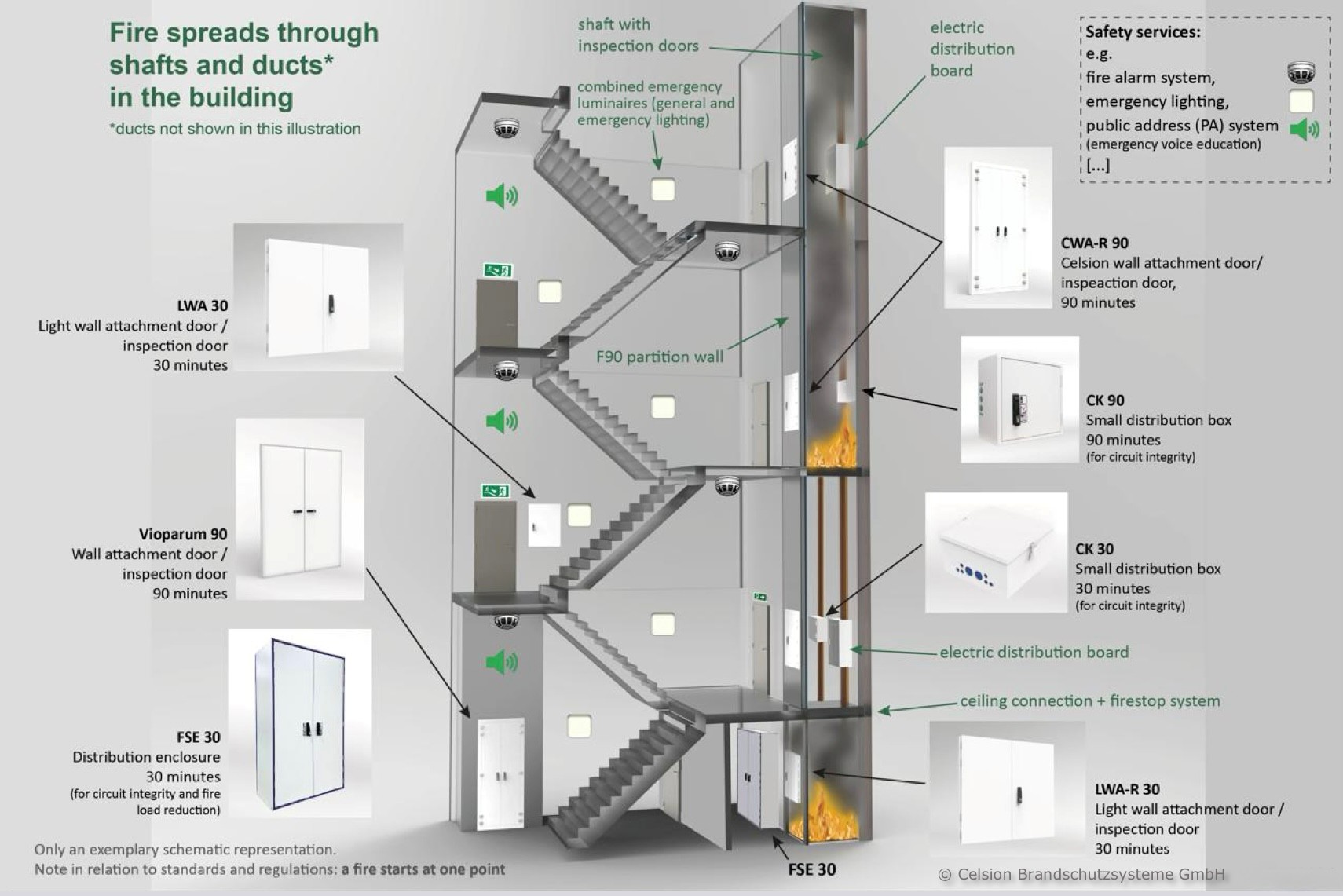
For engineers working in safety-critical building systems, functional reliability under fire conditions is becoming an increasingly central design criterion. Solutions are required that not only comply with regulations and standards, but also enhance operational efficiency and economic performance throughout the building’s lifecycle. Modern fire protection enclosures address these demands by safeguarding critical and safety-related equipment while simultaneously providing architectural and economic advantages.
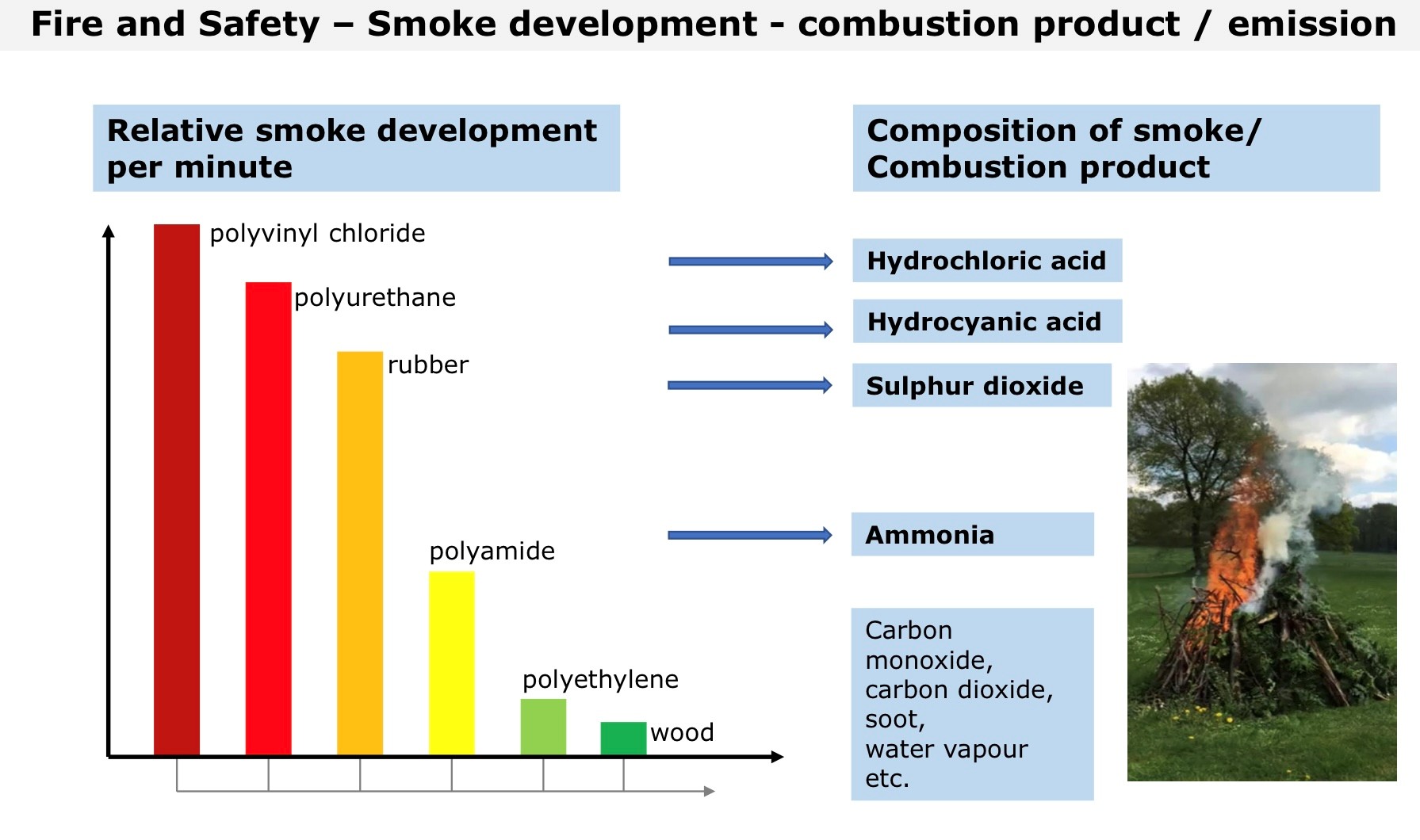
Electrical faults remain among the most frequent causes of building fires. If a fire originates inside a distribution board, it can quickly spread into escape routes without appropriate protective measures—directly affecting evacuation procedures and operational continuity. High-performance fire protection enclosures, such as those developed by Celsion, prevent this escalation: they effectively contain internal fires, limit smoke emission, and maintain the usability of escape and rescue routes. At the same time, they reliably protect the safety and supply systems housed inside the enclosure from external thermal and fire exposure.
This dual protective function—internal fire containment combined with external fire resistance—makes fire protection enclosures one of the most effective tools for ensuring the functional integrity of technical systems within a building. Particularly in escape and rescue routes, they provide a level of safety that conventional installation methods generally cannot achieve.
A further decisive advantage lies in their economic impact:
Fire protection enclosures, distribution cabinets or protective housings can often replace the separate fire-rated electrical service rooms traditionally required for safety-critical or essential systems. This reduces construction costs by eliminating the need for multiple fire-protected rooms and simultaneously increases architectural flexibility. Different systems can be installed within appropriately selected fire protection enclosures and positioned either in a central electrical service room alongside general power supply systems, or decentralised throughout the building. The resulting freed-up area becomes usable or rentable floor space—an immediate benefit, particularly for commercial buildings, hospitals, hotels or residential developments.
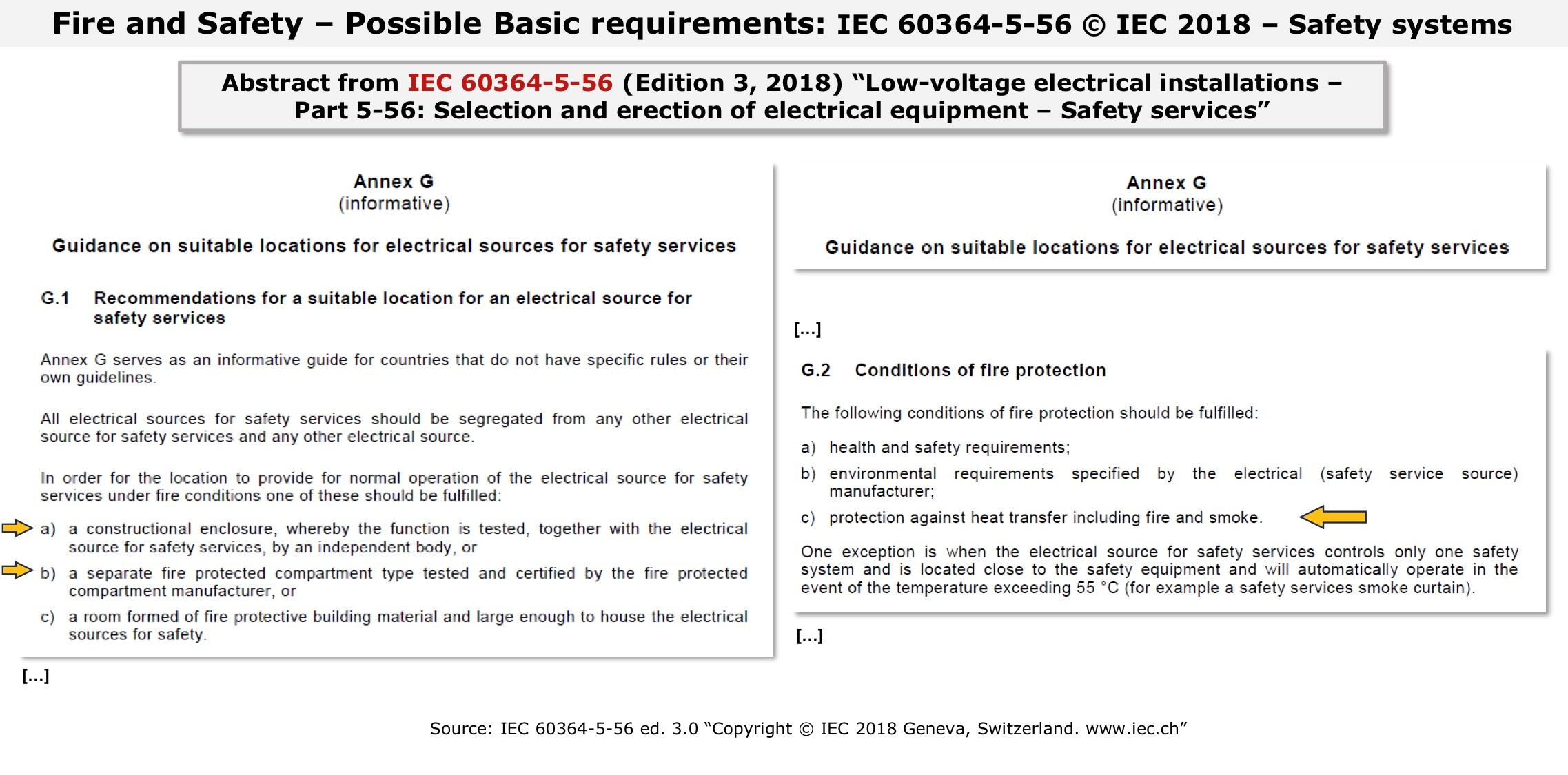
In this context, IEC 60364-5-56:2018, Annex G is of particular relevance, as it specifies three permissible protection concepts for electrical sources supplying safety services:
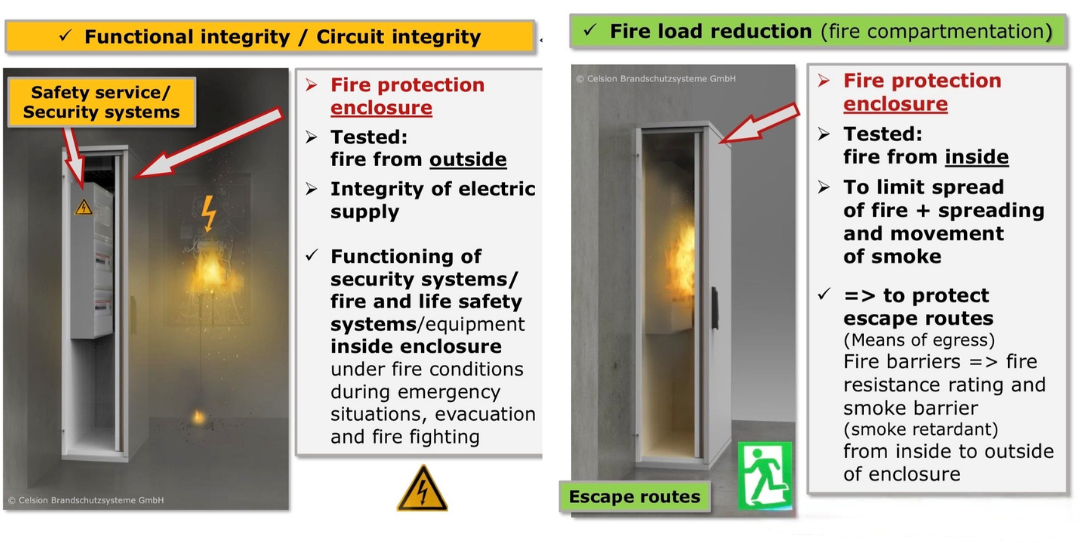
The international standard therefore confirms that tested fire protection enclosures are recognised as a fully compliant solution for housing electrical sources for safety services.
Celsion provides a comprehensive portfolio—from modular fire protection solutions of the “LX-90” series tested in India to compact “CK” small distribution units and high-classified S90/W90 standing or wall-mounted enclosures. All systems are designed for functional integrity, delayed smoke spread through all-round sealing, and project-specific configurability.
This results in fire protection solutions that not only protect lives and support evacuation and firefighting operations, but also create greater design freedom, reduce construction costs and unlock additional usable space—an important competitive advantage for any modern building project.
Author:
Boris Schubert is a fire protection expert with more than 25 years of experience and the Managing Partner of the German company Celsion Brandschutzsysteme GmbH (www.celsion.de) and President of the RAL Organisation (www.ral.de). His work focuses on functional integrity of safety-critical systems, escape route protection, and advanced solutions for tunnel and battery fire safety. He is actively involved in national and international standardization committees and is a frequent speaker at major industry events worldwide.
With a very different concept, the magazine received tremendous and positive response. Passive Fire Safe India is the first magazine covering the Passive Fire segment. Passive fire protection involves Read More..
© Passive Fire Safe India. 2026 All Rights Reserved. Designed by VMH Web Solutions